Balanced Diet for Dogs as per their Size
A Chihuahua and a Great Dane are both dogs—but their nutritional requirements are certainly not the same. Size affects a dog’s total calorie requirement, calorie requirement per kilogram of body weight, growth rate, digestive capacity and, especially during puppyhood, bone and joint development.
That is why feeding should never simply mean: Small bowl for a small dog and a big bowl for a big dog.
The goal is to provide the right amount of energy and complete nutrition for that individual dog.
First: How Much Food Should a Dog Eat?
There is no single correct number of grams for every dog.
The quantity depends on:
- Body weight
- Age
- Breed/expected adult size
- Activity level
- Whether the dog is neutered/spayed
- Body condition
- Pregnancy or lactation
- Medical conditions
- Calories contained in the particular food
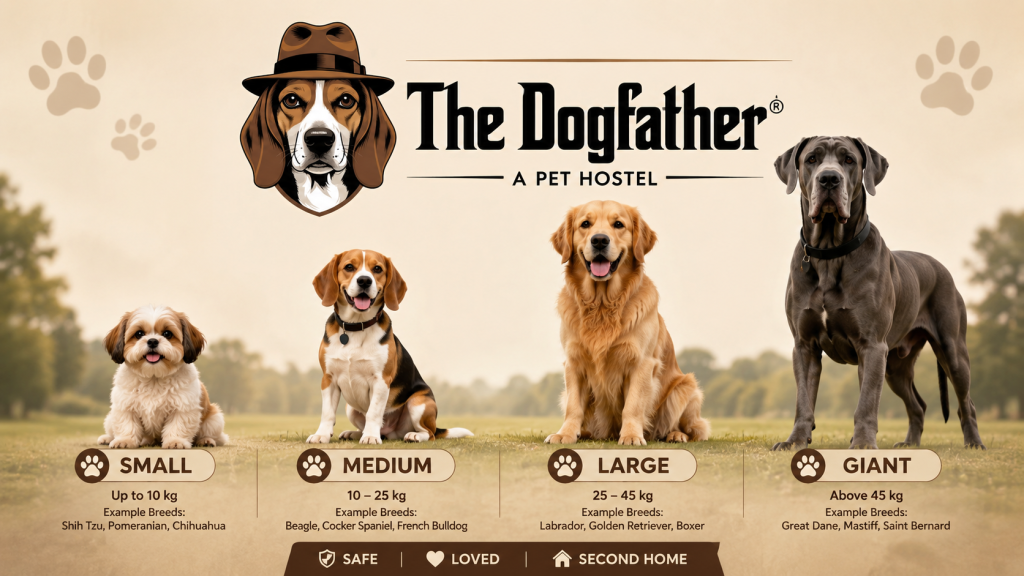
For healthy adult dogs, the following table can be used as a practical starting guide, not as a prescription.
| Dog Size | Adult weight | Approx. Daily Calories |
| Small | 3-10 Kg | ~200–600 kcal |
| Medium | 10-25 Kg | ~550–1,000 kcal |
| Large | 25-45 Kg | ~900–1,500 kcal |
| Giant | 45-70+ Kg | ~1,400–2,200+ kcal |
1. Small-Breed Dogs
Examples: Chihuahua, Pomeranian, Shih Tzu, Maltese, Toy Poodle, Yorkshire Terrier
Small dogs may have tiny stomachs, but that does not mean their nutritional needs are tiny. Relative to their body weight, small dogs can have fairly high energy requirements. Their smaller stomach capacity also means their meals need to provide adequate nutrition without requiring an enormous volume of food.
A meal can contain:
Protein source
- Cooked chicken
- Egg
- Boneless fish
- Lean meat
Carbohydrate/energy source
- Rice
- Oats
- Sweet potato
- Potato
Dog-safe vegetables
- Pumpkin
- Carrot
- Green beans
- Bottle gourd
2. Medium-Breed Dogs
Examples: Beagle, Cocker Spaniel, Border Collie, Indian Pariah/Indie and many medium-sized mixed breeds
For medium dogs, activity makes an enormous difference. Two 15-kg dogs can require different amounts of food if one spends most of the day sleeping while the other runs and exercises extensively. The weighing scale tells us the dog’s size. Lifestyle helps tell us how much fuel that body actually uses. Medium dogs generally have more room in their calorie budget than toy breeds but still need portion control. A Beagle, for example, may happily continue eating long after its actual energy requirement has been satisfied.
A meal can contain:
- Cooked chicken/fish/egg or another suitable protein
- Rice, oats or sweet potato
- Pumpkin, carrots, beans or other dog-safe vegetables
- An appropriate fat source
- Correctly balanced vitamins and minerals
3. Large-Breed Dogs
Examples: Labrador Retriever, Golden Retriever, German Shepherd, Rottweiler, Doberman
Large dogs obviously require more total calories than small dogs—but simply increasing the quantity of food is not enough. Body condition becomes particularly important because every unnecessary kilogram adds additional load to the dog’s musculoskeletal system.
A suitable meal may contain:
- A high-quality animal protein source
- A digestible carbohydrate source
- Dog-safe vegetables
- Appropriate essential fats
- Correct mineral and vitamin balance
4. Giant-Breed Dogs
Examples: Great Dane, Saint Bernard, Newfoundland, English Mastiff, Tibetan Mastiff
Giant breeds deserve special attention—particularly while they are growing. A Saint Bernard puppy may eventually become many times heavier than a small-breed puppy. Its skeleton therefore has an enormous construction project underway. Giant-breed puppies require carefully controlled nutrition. Excess calories can encourage excessively rapid growth, while inappropriate calcium and phosphorus intake can interfere with normal skeletal development.
This is why giant-breed puppy nutrition should not simply be: He is going to become huge, so feed him as much protein, calcium and food as possible.
For large and giant puppies especially, use a complete diet formulated for their growth stage rather than casually adding calcium supplements.
What Should a Healthy Dog Meal Actually Contain?
Quality Protein + Digestible Carbohydrate + Dog-Safe Vegetables + Essential Fats + Correct Vitamins & Minerals = A Truly Balanced Dog Meal.
And remember, portion size and nutrient requirements are different for small, medium, large, and giant breeds—there is no single bowl that fits every dog.
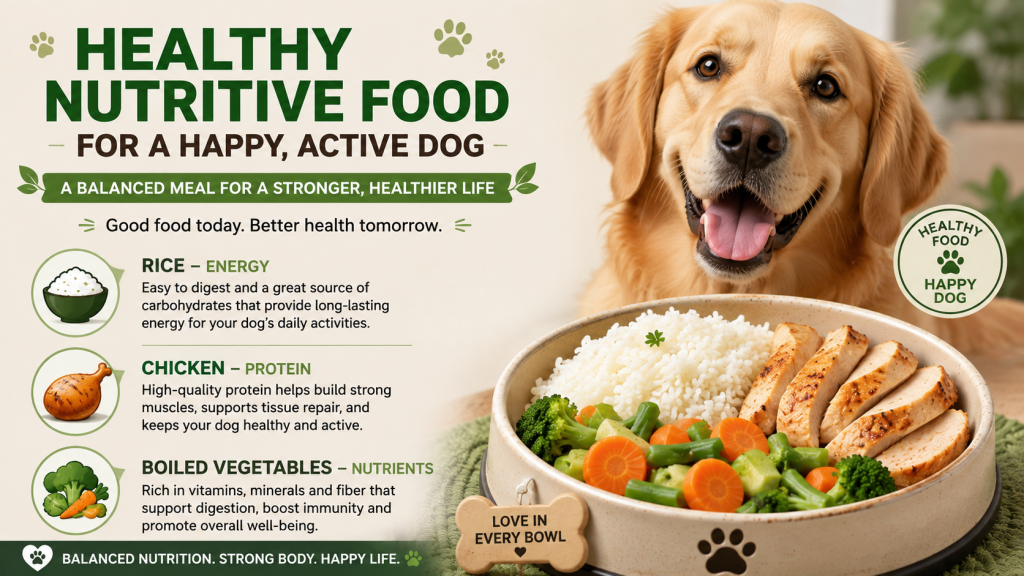
A healthy diet is not about filling a bowl—it is about nourishing a life. From small breeds to gentle giants, every dog has different nutritional needs, but they all deserve the same foundation: balanced, wholesome and thoughtfully chosen food. The right nutrition today supports stronger bones, healthier joints, better immunity and more energetic years ahead.
Pukhraj Dhatt
Founder, The Dogfather Hostel